Showing posts with label guest blogger. Show all posts

Wednesday, 1 June 2016

Student Voice: Going to a Catholic School


You get to learn to live like Jesus, and He is the Son of God.

Thank you to Jillian Fantuz, guest blogger from Holy Trinity Catholic School for submitting.  You can find her on twitter @msfantuz


Tuesday, 31 May 2016

When Father Steve visits...


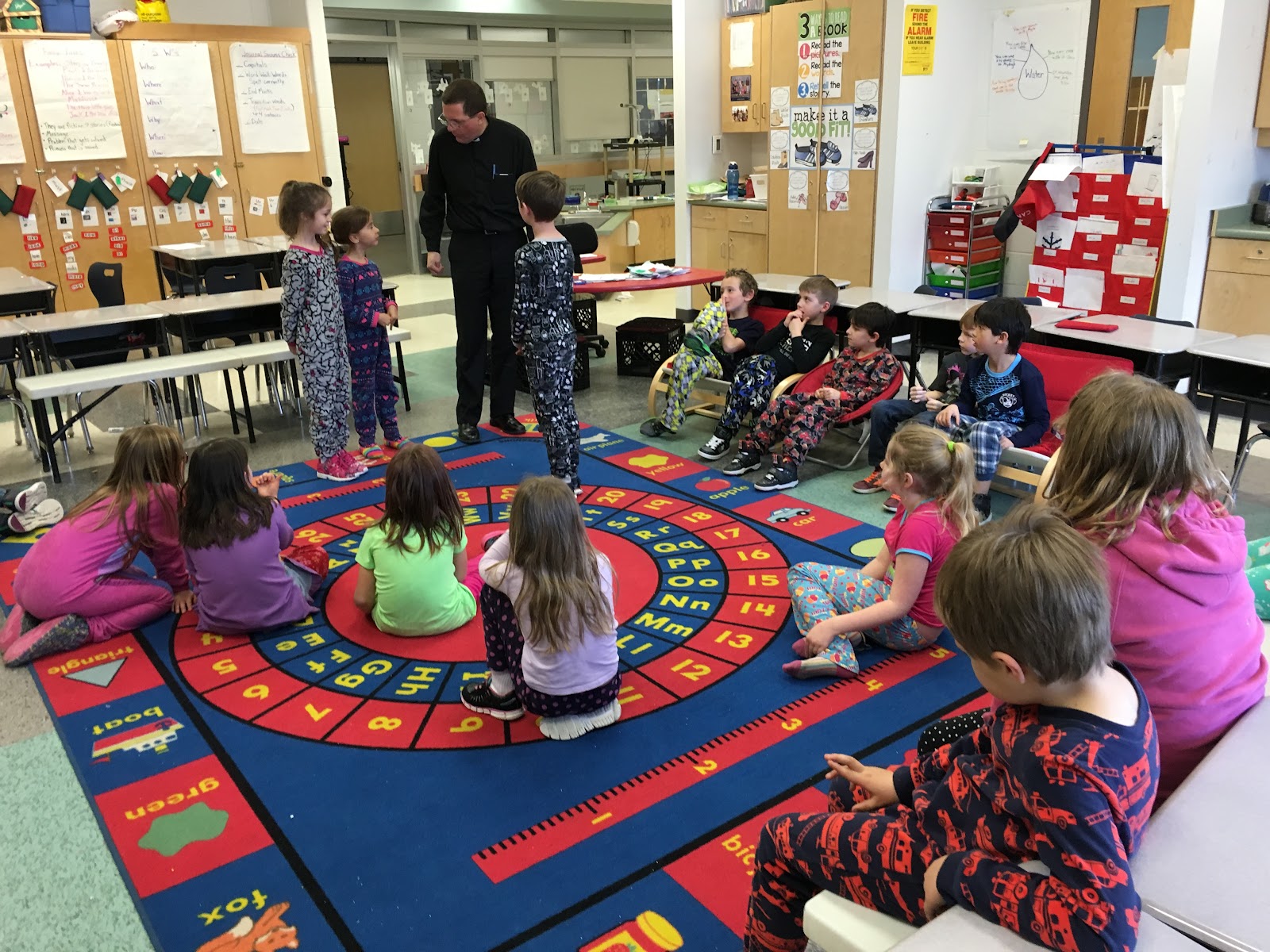
Father Steve Savel visits Holy Trinity once a week! Here is what the kids think!
I think that it’s fun to do the little plays with him and he shows us the stories of Jesus everyday when he comes in - Justice (grade 3)

He’s amazing and is changing the world - Connor (Grade 7)

I really enjoy Father Steve coming into the classroom.  I’ve known him for a few years because he is my priest at St. Joe’s which is my family's parish.  He puts a positive experience on me. - Drew (grade 4).

Friendly father steve is Friendly
Awesome he is awesome
Truthful he is truthful
Heart he is a good heart
Easy he is easy
Rockstar he is a rock star

Star he is a star
Truth he tells the truth
Excellent he is Excellent
Very he is very good
Extraordinary - Breanna (Grade 4)

He comes in and gives us a skit to do.  It brings life to the parables and a modern way of learning which makes it engaging, exciting and more interesting.  We all want to interact with him and the skit because it is fun in many ways. - Josh and Lilli (Grade 8)
We actually learn what he is teaching us because he makes us act it out rather than write it. - Vince (Grade 8)

He’s friends with my dad so I have a relationship outside of the church with him.  He is very engaging in the classroom and other priests haven’t been like that before.  He’s open and makes it a safe place for us to ask questions about our curiosities in our faith. His skits help us understand more about the bible and Jesus’ teachings. - Fayth (Grade 8)

He is nice to other students and other classes.and very generously to people and does nice things to all the students and have a kind heart. and are very nice when come every week and you do,not have to do that but you do that's how you are sweet and do plays. - Janelle (Grade 4)

Father Steve comes in very week to tell us about Jesus.  Father Steve is a nice person. Father Steve always has a great smile and attitude.  Father Steve helps us to make great choices every day. We love you Father Steve!  You do lots for us we should do that to you to! - Kaitlyn & Katie (grade 4)

I love Father Steve because he comes every week. Father Steve teaches us about God.  Father Steve  loves us all.  Father Steve is nice to all of us.  Every time we get hurt he helps us.  We love Father Steve - Talia and Isabella (Grade 4)

Father Steve loves god and Jesus he also helps us learn about God and Jesus. Father Steve tells stories about Jesus. He goes in our class once a week. Father Steve makes me think of Jesus. - Daniel (Grade 4)

Friendly
Awesome
Truthful
Helpful
Excellent
Rockstar

Super
Truth
Easy
Very
Extraordinary - Martin (grade 4)

Father Steve comes in our classroom to do skit with us. He gave us a rosary he also comes in to pray for Jesus. You’re the best priest ever. - luke and oliver (grade 4)

I like it when we do fun stuff like skits. I also like it when you say “chow” when you have to go. I like it when you share your adventures. You are also very kind. - Nolan (grade 4)

Oh Father Steve you are the best oh you do play with us you gave me a bag so we love you very much thank god   - Tait (grade 4)

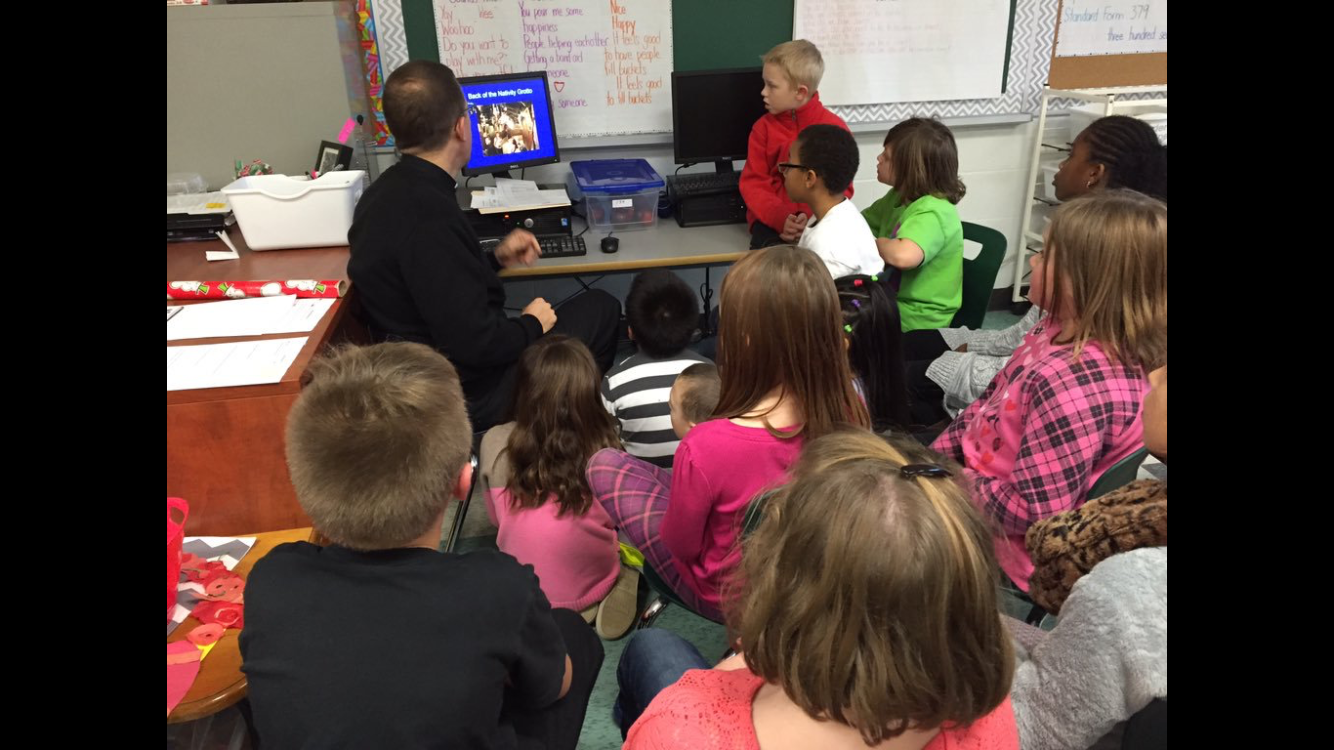
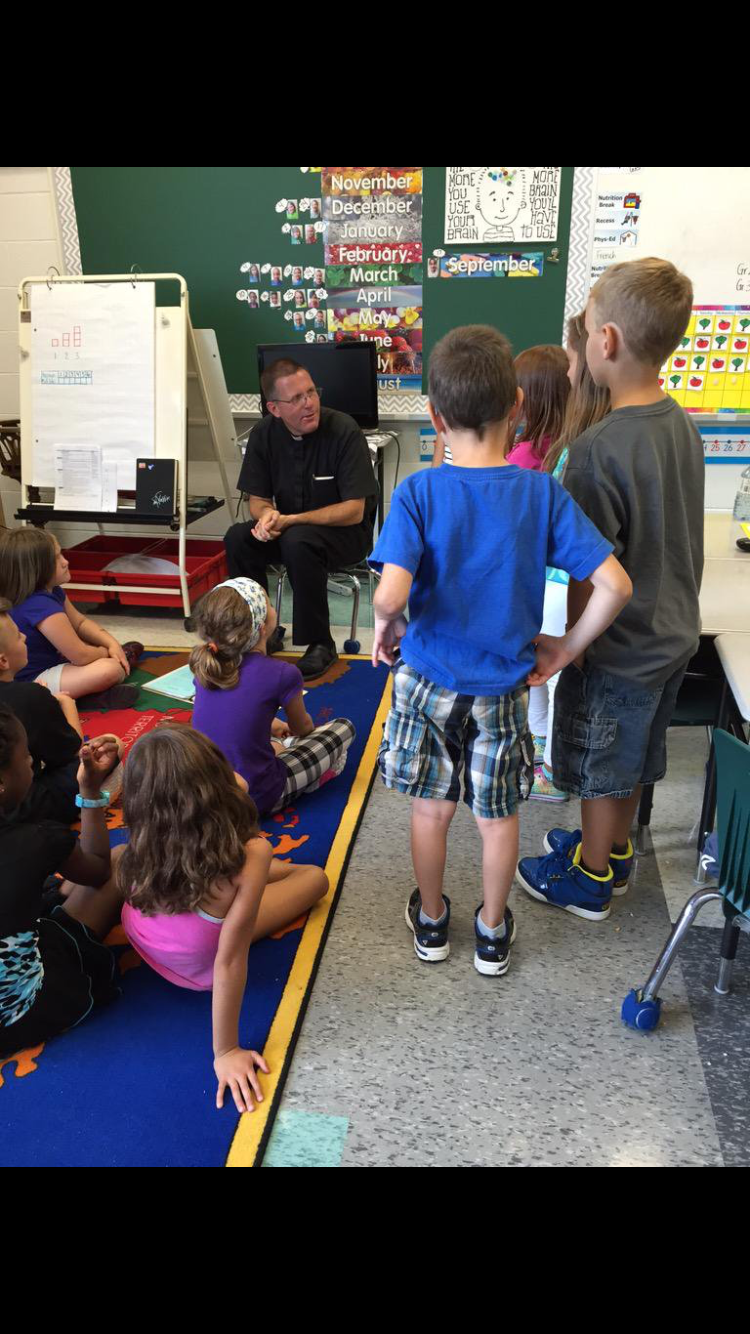
Hi my name is Father Steve Savel. I am a priest at St. Benedict's.  I visit Holy Trinity Catholic School in Sarnia every week.  I try to visit every classroom on a weekly basis to share the good news.  We always try to pray together at the beginning and we try to have a little skit or play to illustrate something from the bible or a teaching of our faith. I usually have a question period at the end of the lesson where students can ask questions about their curiosities in their faith.  The kids are very enthusiastic and welcoming and appreciate hearing a different voice.

Having Father Steve in my classroom has changed the way the students approach their faith.  They are excited to see him and are energetic about participating in his skits.  When Father Steve first starting coming into my grade 1/2 classroom the students did not know the act of contrition prayer, but after starting with this prayer every week the students have grown to be able to recite the prayer by heart.  They also know how to respond “and with your spirit” with confidence and I have noticed a difference in the unity of our school wide responses during church. Father Steve makes an effort to get to know everyone personally and is an active participator in our school community.  He volunteered himself for our annual “pie in the face” fundraiser to raise money for the terry fox foundation. He has also taken classes on tours of the church which has given the students a sense of pride and belonging and a deeper connection to their faith. Having Father Steve in our school has had a very positive impact on our teachers, parents, and students

Thank you to guest blogger, Jillian Fantuz, elementary school teacher in Sarnia, ON. She can be found on twitter @msfantuz 

Monday, 30 May 2016

Does "=" equal understanding?


Do your students understand what the equal sign means?
Take a moment to reflect on that question.

Nearly every classroom teacher, when asked this question by the Student Work Study Teacher (SWST), answered “Yes!” or, “I sure hope so!” It’s probably reasonable to assume that student understanding of this concept is something that’s taken for granted by many educators. From an early age, students are shown “=” embedded in mathematics questions: from simple addition subtraction in the primary grades to more complex algebra and numeration in the junior and intermediate grades. In many ways, success in mathematics operations hinges on the idea of equality in a sentence -- simply put, knowing that 2 + 2 equals 4. If students are doing well in math, it reasons that they’ve got a firm understanding of this concept.

To check this understanding in junior and intermediate classrooms, the class is always give the same question. Students are asked to write down the problem on their paper or white board and to solve it.

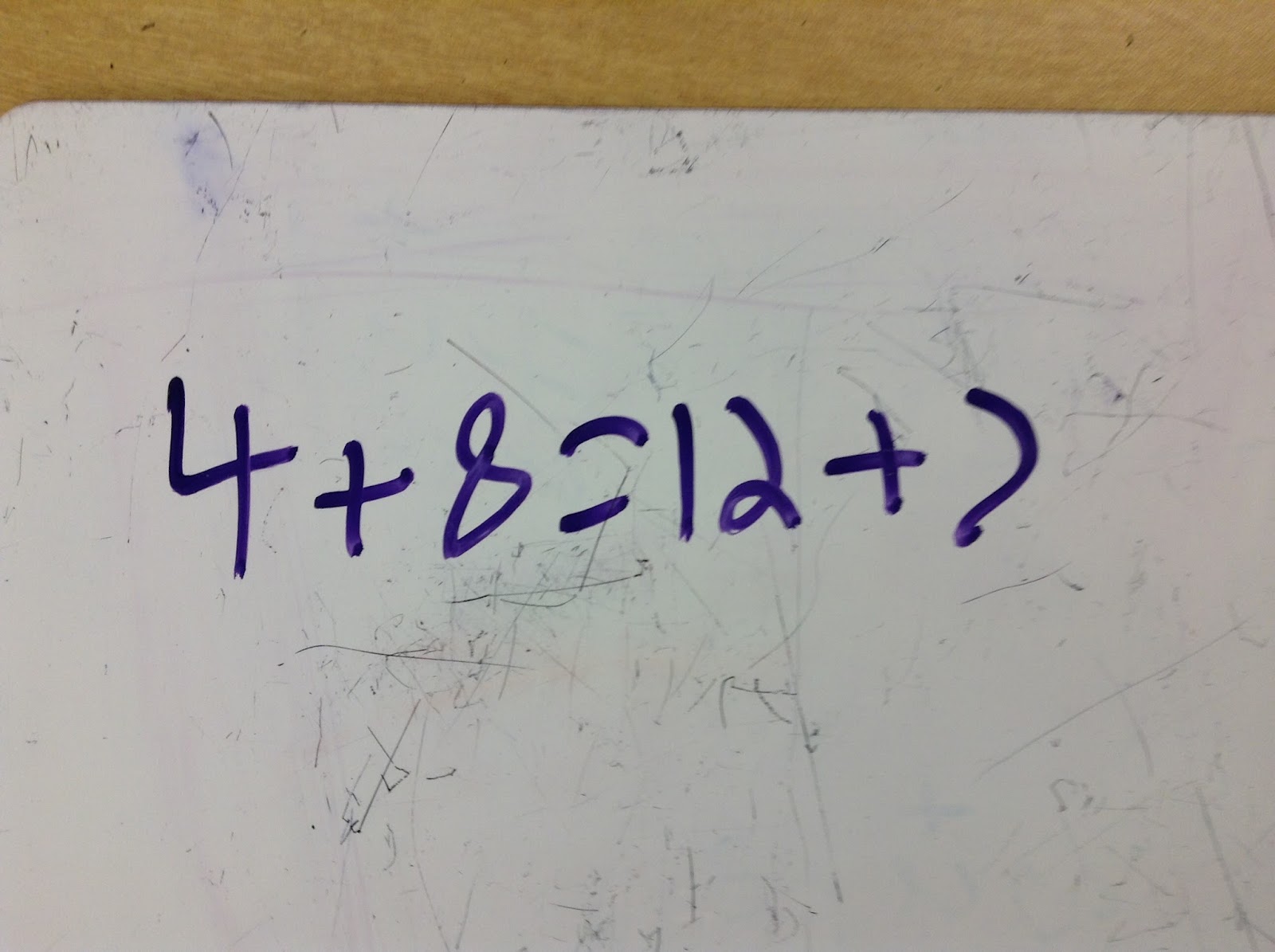
4 + 8 = __ + 5 or 4 + 8 = __ + 7

Below is a representative sampling of some the answers students gave to this question.
IMG_2476.JPG
IMG_2482.JPG
IMG_2854.JPG
IMG_2851.JPG
In each classroom this task was given, anywhere from 70-100% of the class wrote an incorrect answer in the blank space. This usually comes as a surprise and/or shock to the classroom teachers:

"After some discussion with the SWST about how students would answer this question (4 + 8 = ? + 5), I was convinced that the majority of my students would ‘get’ this without any difficulty.  I certainly did not believe that many of them would write “12”.

“I asked students to think about the problem I wrote on the whiteboard, without talking to a neighbour or working out any math; just to think about it.  After a minute or so, I asked them to write what they thought would go in the box on their own whiteboards.  I was floored as I walked around the room and saw the overwhelming majority of responses being ‘12’!  I couldn’t understand it!”

After some discussion, some students offered that the answer must be 12 because 4 + 8 = 12.  They completely ignored the + 5 part of the equation."

Clearly, there is a trend: this misconception exists in several grades across multiple schools in this system. As a next step, we asked the students what the equal sign means to them:

“The equation before it needs to be equal to the one after it.”
“The first part before = has to equal second part.”
“The sum (or total) of 4 + 8.”
“Just a way of adding them up.”
“Equal to or the same as.”
“Equivalent equations that have to have the same answer.”
“The total of numbers you’re trying to find the answer to.”
“Equal up to ___.”
“The answer.
“The total.”
“The equal sign means they are equal to each other.”
“This sign means the sum of the question/equation.”

In his article A Balancing Act, Henry Borenson identifies two inherent meanings students can acquire for the equal sign - relational and “calculator”:

The use of the equal sign to indicate the unique numerical result of the sequence of computations that precede it (the “calculator use” of the equal sign) is a valid and necessary use of this sign...However, understanding the relational meaning of the equal sign also is essential for success in mathematics, and particularly in algebra. Whereas such equations as 3x + 5 = 26 can be understood knowing only the operational meaning of the equal sign (because 26 can be considered the result of the operations that appear to the left of the equal sign), examples such as 4 + 3 = __ + 2 and 4x + 2 = 2x + 6 cannot (Kieran 1992). In these examples, the equal sign indicates equivalence between two sets of expressions, each one of which includes one or more operations within it.


Thinking back to our initial question -- Do your students understand what the equal sign means? -- there is sufficient evidence to conclude that across the system students have a range of misconceptions about what the equal sign means in the relational context of the question 4 + 8 = __ + 7. The next question then naturally becomes: What can we do as teachers as a next step to immediately respond to this misconception?

How do you think your students will answer if you gave them the question above as a cold task? We would love to know what happens in your class - let us know in the comments below.

Thank you to guest blogger, Christopher St. Amand, SCCDSB Student Work Study Teacher. He can be found on Twitter at @MrStAmand 
.

Monday, 16 May 2016

Next Year is Too Late to Start - One Teacher's Reflection

It really is about learning! 

Recently I have moved from experimenting with Docappender and Goobrics to using them.  These are tools that I use in Google Apps for Education to quickly record observations into separate student files and assess and give feedback to my students on their work.

Like everything, there are stages that I have to go through before I can put something into practice.

Stage One-The Commercial
Stage Two-Reading the Instruction Manual
Stage Three-Unpacking the box
Stage Four-Attempting assembly
Stage Five-Playing with the toys while the children are asleep
Stage Six-Telling a Friend
Stage Seven-Helping a Friend
Stage Eight-Finding every use possible for this new toy!

The first four stages are really all one. Not all occurring in the sequence listed all the time. Sometimes I unpack the box of tools long before reading any instructions. This is often a big mistake for me, because the instructions will often help me find uses for the product (stage 8).

Stages five/six are also more one phase – the fun phase where it is not really productive yet, but becoming more familiar. Stage Six is the consolidation phase. Good pedagogy tells us that if someone can explain it, then the likely have a deeper understanding of it. Although a little out of order, if I explain it to someone who I consider “a safe person” then I am more likely to share the excitement.

I am using Docappender to keep anecdotal comments about student inquiries in science and collaboration and use of class time in my math classes. I think this will help give me a much more accurate set of Learning Skills for the final report card.

My next goal is to 
1. Share the file with my students once I have a habit of using it, 
2. Have them respond digitally by making comments to my entries and 
3. Conference with them face to face.

Next year is too late to start, but not too late to hit the ground running.
More to follow …

Thank you to guest blogger Deacon Raymond Girard, teacher at UCC.  He can be found on twitter @MrGatUCC


Thursday, 14 April 2016

Advice from a High Schooler: The Most Important Thing is Asking the Right Questions


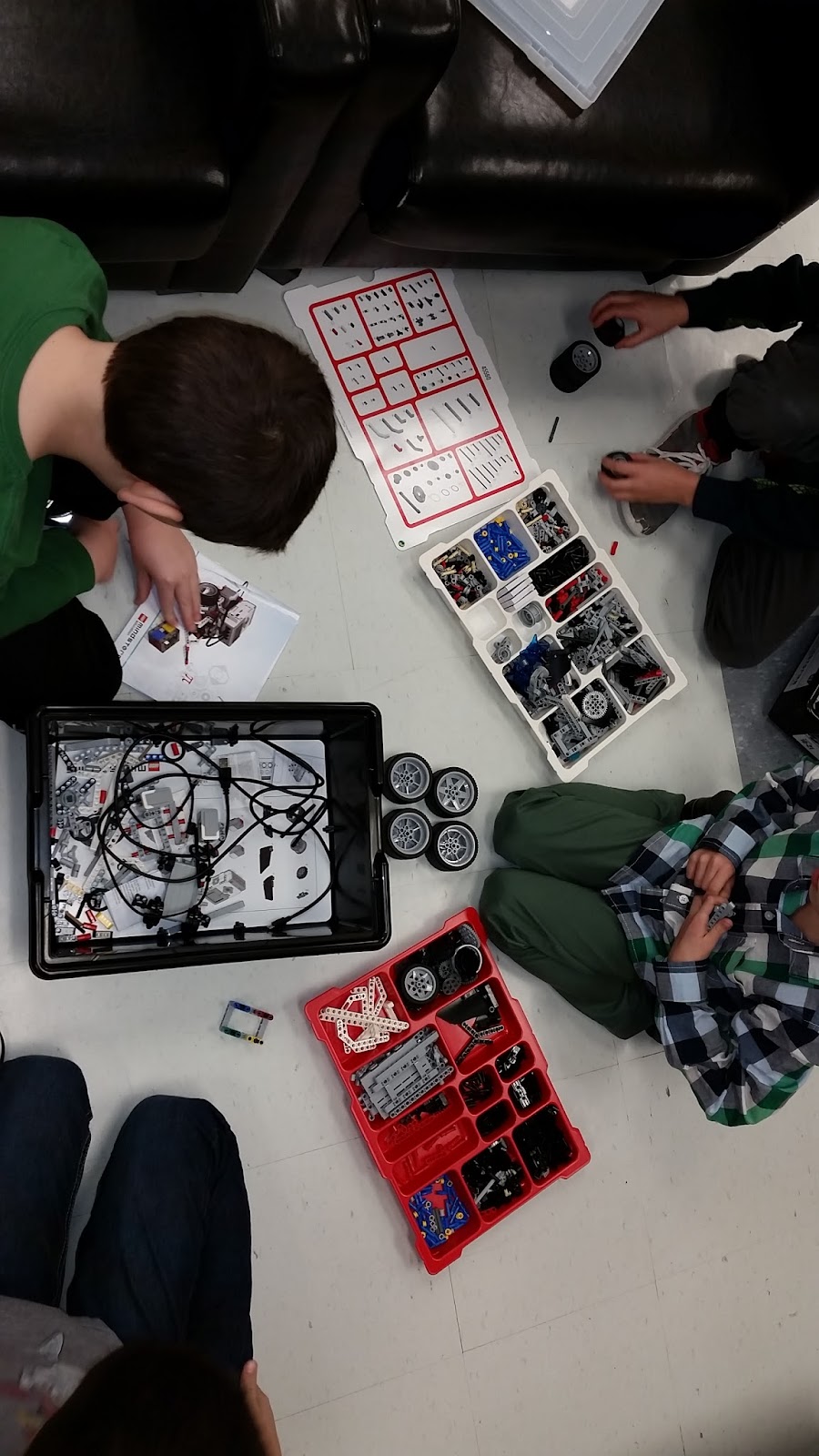
Robotics: designing, constructing, operating,applying.
Team: collaborating, problem solving, goal-setting, accountability.

20160219_141449.jpg
20160219_141704.jpgThis year, as our school Robotics Team was about to begin, I do admit I was incredibly nervous. I felt as though I didn’t know enough about Robotics to be able to develop and sustain a team. I decided my first step in learning how to start would be to interview a high school student who has been part of the Robotics Team since he was in elementary school. At our meeting, he said something very powerful that resonated with me and impacted my perspective on not needing to have an extensive background in robotics to begin. He said the most important part of facilitating a Robotics Team is not to give the answers but to ask the right questions that would lead to the team generating ideas and strategies. I was immediately at ease and excited for the new adventure. I was feeling ready to begin a learning partnership with the students. I began reflecting about the students and how such a team could benefit them in developing their life long learning skills, to motivate them to achieve and develop key future skills. I wondered how participation in the Robotics Team could develop both the individual student and the group. I also wondered how the learning skills each team member was developing would not only benefit the team, but also transcend into the classroom.
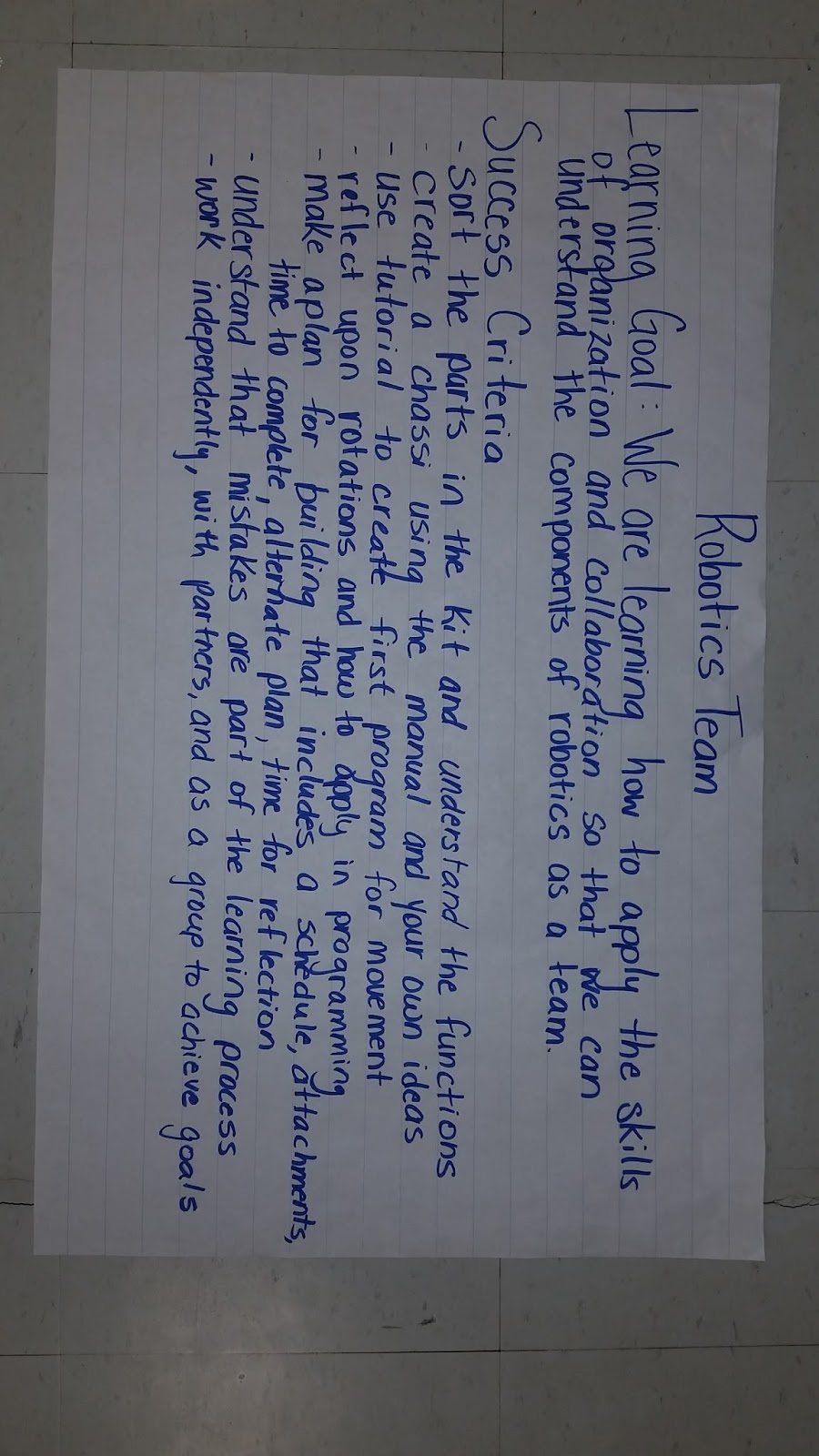
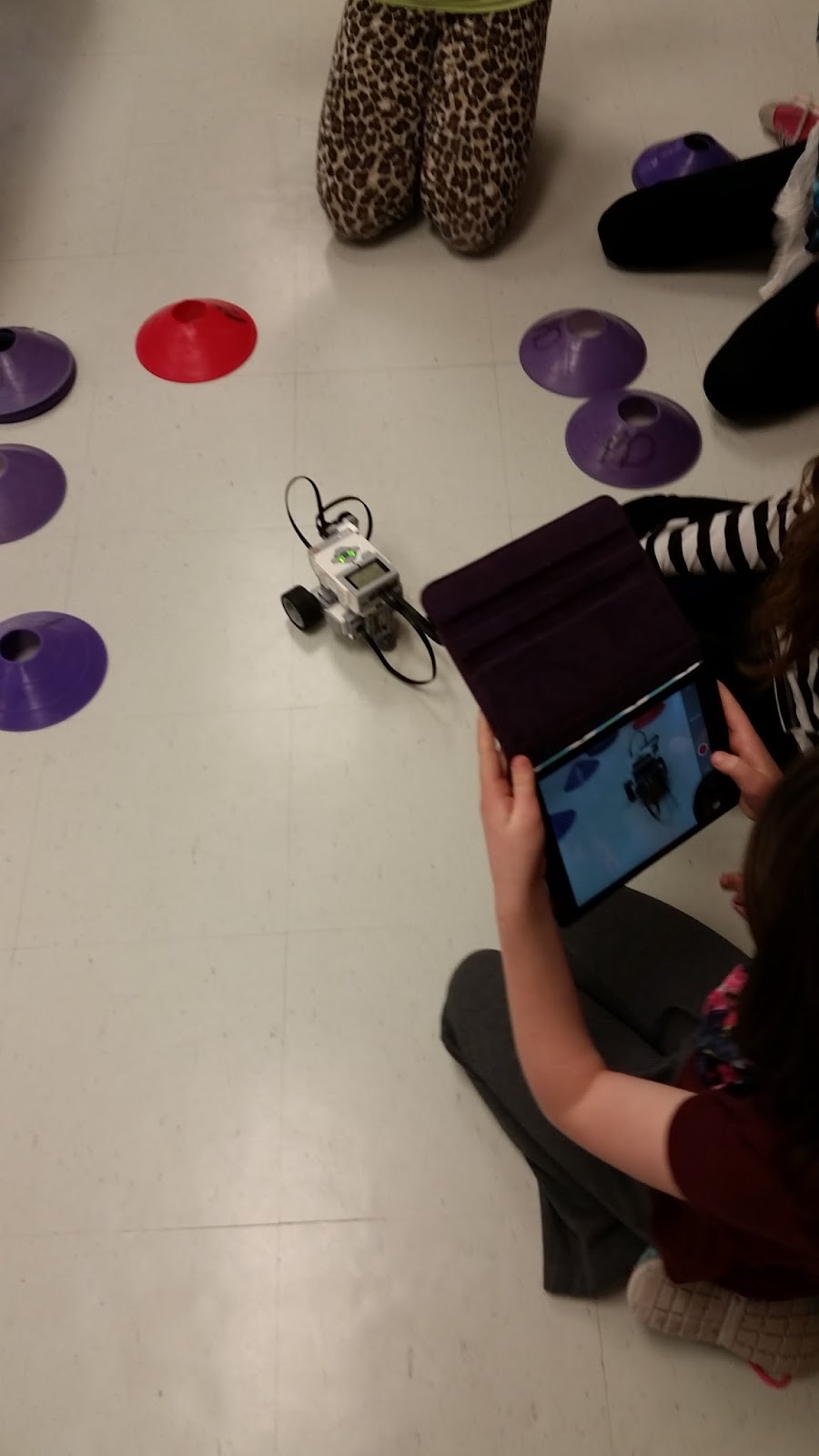
Each week, when we meet, the students are so engaged and genuinely amaze themselves, their teachers, and myself about how much they are developing the learning skills of organization, collaboration, problem solving, responsibility, independent work, self-regulation, and initiative. They are making the learning skills come alive! They show initiative as they plan new challenges to overcome. The most recent challenge they are planning for is how to program their robot in an obstacle course. They are persevering and demonstrating self-awareness as they self-regulate within their partnerships. The students are becoming aware of the need to be flexible and open-minded as they collaborate towards a common goal. Students are realizing that their prior assumptions about how to accomplish a task are getting challenged and they need to be able to effectively reach a group consensus before moving forward as a team. They are developing their key future skills, they are learning to collaborate, problem solve, and communicate. The 6 C’s are being developed through their application of learning skills during each session.  

Throughout each session, as I interact with students and listen in on their dialogue to determine next steps, I encourage them to think through their steps and monitor their progress, ask one another questions, and challenge them to persevere. At the end of each session, it is proving to be very valuable to take 5 minutes for whole group reflection for students to share what they learned throughout the session and what they think they should do next. They are monitoring their own progress and are aware of the challenges they have to overcome. This is assessment for and as learning in action! We have only begun to scratch the surface in how we can monitor our learning and set goals for ourselves and the team.
20160115_143857.jpg
20160115_141649.jpg“I don’t know how to do everything involved so sometimes the best thing I can do is just to listen. If I’m not so good at things, I can work at it and get better like when we were programing and we didn’t know how to but we worked at it and learned how to.” (Student, 2016)
“I can help my team and they’re willing to accept my ideas and they are willing to help me if I need help too.” (Student, 2016)


Our first Aha Moment!
20160226_142746.jpgWhen the students came to the first session, I wanted to start them with an organization task. This task would allow them to have their kit organized and would also familiarize them with all the components. I thought perhaps the students would want to get to building right away and somehow be bored with the organization task. Just the opposite was true. The students were completely engaged. They were so curious about all the components and were very eager to become oriented with the robotics kits. This session also proved favourable as we progressed through the weeks. The students quickly realized the time spent at the beginning allowed them to have a bigger picture of all the parts and provided them with more ease as they located and built their robots.  
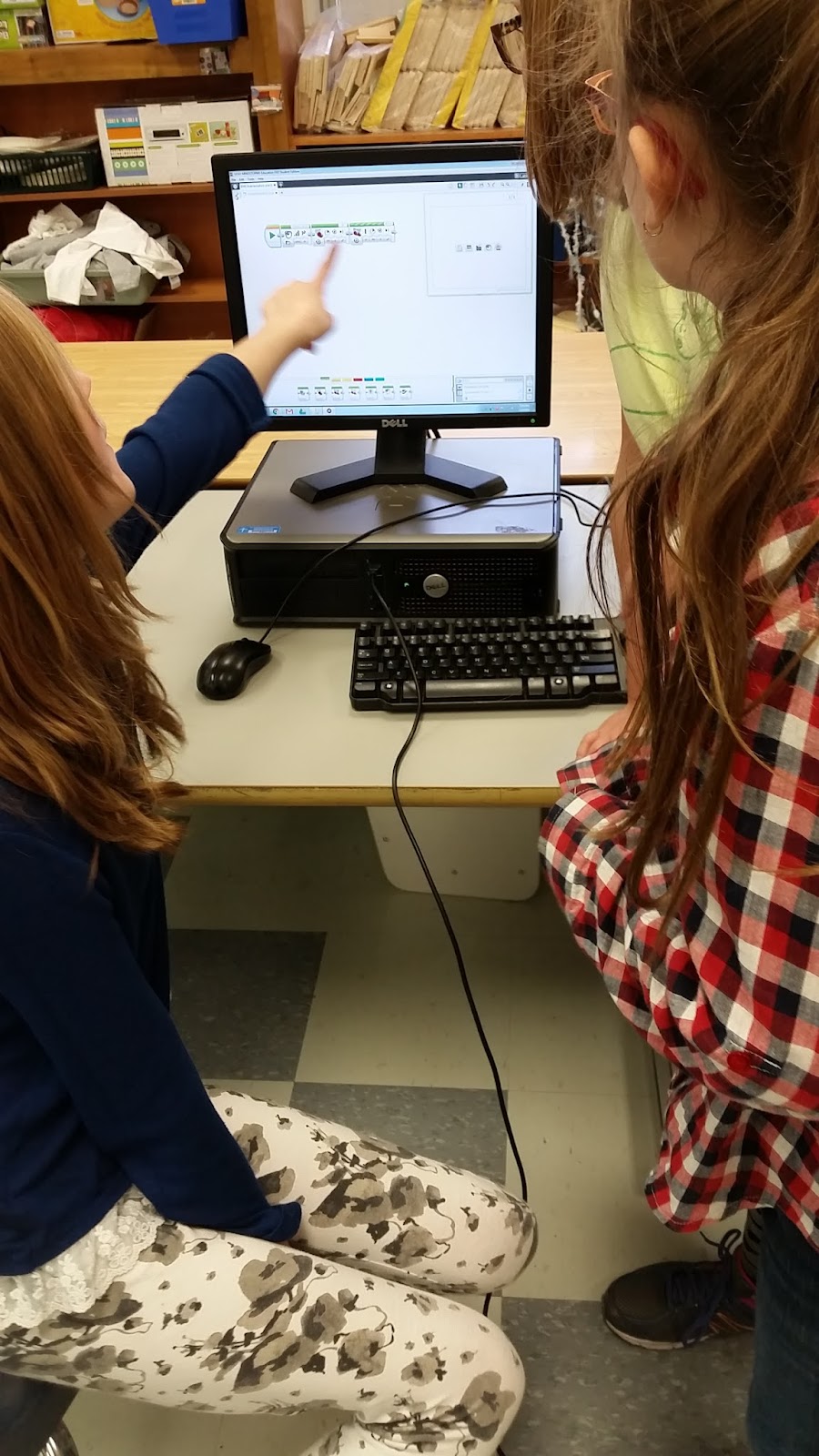
The students had their own realization, too. They quickly realized the time spent planning and organizing up front pays off. They were able to focus on the building and collaborating since they all were part of developing a common goal.  
So, instead of the boredom I feared, the session allowed us to learn a valuable lesson that would be necessary for future team growth.


Throughout each session, the students share that they are learning more about themselves and are developing an awareness that the skills they are developing can be applied in other areas in their day to day life such as the classroom. They are excited to share how they overcame a challenge and how they needed to take a step back in the building or programming in order to move forward with their goals.

20160205_142628.jpg
“I learned that when something goes wrong, I cannot get frustrated and need to keep trying.” (Student, 2016)

“I learned that I shouldn't be so uptight and to just get out of my shell and have fun with what I am doing. I learned to not be afraid to have a partner for work in class and not to be so uptight about work in school and to have fun with it.” (Student, 2016)

As I reflect upon the apprehension I felt to start, I am so glad we jumped in and are learning both about robotics and ourselves as learners. There are new challenges that lie ahead. Learning how to program and continuing to learn how to negotiate working as a team with self and group goals, for example. The time spent during each session flies by and is creating growth on all parts!  

“An exciting moment was when we started to program. This gave me a shot of excitement and I want to learn how to program.” (Student, 2016)

“I can really see the shift in his confidence in the classroom! Over the past few weeks, he has been offering more ideas in class and is beginning to handle his frustration so much better. He used to give up quickly and say he couldn’t, but now he is persevering more.”
(Teacher, 2016)

Thank you to SCCDSB teacher, Cortnee Goure, in Wallaceburg, ON for sharing her learning! She can be found on twitter @CGoure1

Tuesday, 5 April 2016

What Can They Can DO Rather than Know... One Teacher’s Thinking on Inquiry - Part Three

This is part three of a three part post - 2 STEPS TO SIMPLIFIED INQUIRY: Research & Thinking.  Thanks for reading!

A colleague asked for some help in putting together an inquiry, so I put this together as one idea..

A simple machine unit that culminates in building a Rube Goldberg machine and documenting the attempts and successes.


Thanks to a SCCDSB teacher from St Michael's in Ridgetown who submitted this post. She has chosen to have her name withheld.

Monday, 4 April 2016

What Can They DO Rather than Know..One Teacher’s Thinking on Inquiry. - Part Two

This is the second in a three part post: 2 STEPS TO SIMPLIFIED INQUIRY: Research & Thinking   

Step 2:  THINKING ---Thinking Critically!!
  • Students click on a link -now what?
I will be honest - this part is even trickier.  Students new to inquiry and research will expect that the answer will be sitting there in huge bold print!  They feel frustrated when they discover that it never is.  This is where we train our kids to scan passages for keywords or numbers and to read around the text.  This is the evaluate portion of inquiry.  They will need to keep verifying what they think is the correct information against the actual question.  Was this the information I was asked to collect?  Does this answer the question posed?  Your kids will get better at this with lots of exposure, but in my experience they start with some pretty impulsive behaviours and don't really want to read accurately on their own.  They are happy to sit back and wait for you to do it for them.  Don't!  If they don't find exactly what they need from one site, have them persevere and try another.  In the process they will come across and gather more information than just your initial specific expectation.  Therefore, increasing their background knowledge.  Your students will be reading and thinking- killing two birds with one stone.
  • They find facts and data.  So What!
This is where you want to prompt them to discover the significance behind these facts and listen to what connections they can make from their own schemas. This is also where you can focus on student interest and try to build some side research if they seem intrigued by something.
e.g.  FACT:  Early Settlers traveled for many weeks across the Atlantic under some terrible conditions.
TEACHER PROVOCATION:  “So what?  What can this tell us?”
STUDENT EXAMPLES:
  • “I know that the boat ride was a horrible experience” - so why did they come?
  • “I know that they would have landed and stepped into wilderness and scary conditions” - again, so why would they even want to come?
  • “So I think they must have had some very serious reasons for coming to Canada in the first place.  Let me find out what these reasons were.”  (Religious persecution; famine; poverty etc.)

THINK OUT LOUD - LEVERAGE DIGITAL:
IMG_3507.PNG
These students used Chromecast to project what they found about global forms of government and then came up to discuss what they think their information meant.  They also listened to what their peers thought.
Try a variety of digital tools to get the students “thinking out loud” and considering the opinions and perspectives of their classmates.  Tools such as Chromecast as well as self documenting tools like Educreations, Explain Everything, and YouTube Capture, are also fun ways to get students to vocalize and share their thoughts.


The point is, there isn't any specific formula for making inquiry work.  Every day is a balancing act.  We want to cover the curriculum but in a way that gets our students thinking, developing those metacognitive skills, and coming to a deeper understanding of the concepts. 

This might be possible with good inquiry, if we focus on just two main ideas: research and thinking.  Then, when it's time to do reporting, our comments can focus more on what our students are able to do rather than what concrete information they know.   

Watch for part 3 soon!


Thanks to an SCCDSB teacher from St Michael's in Ridgetown who submitted this post. She has chosen to have her name withheld.

Wednesday, 2 March 2016

What Can They Can DO Rather than Know... One Teacher’s Thinking on Inquiry - Part One

2 STEPS TO SIMPLIFIED INQUIRY: Research & Thinking. This is part one of a three part post - watch for part two soon!


When we think of incorporating inquiry into our classroom we really don't have to stress and find new ways to think outside the box and stray from the curriculum.  Rather stick with the curriculum as your guide as you always would, but be less concerned with covering all the content and focus more on skill development.


We are teaching in some pretty amazing times.  Our students really have no great need to remember copious facts about layers of soil or which provinces didn't initially agree with confederation.  With a swipe of their fingers they can find the answer in 5 seconds or less on the very same device that they seem glued to or that is never very far away.  With inquiry we have the potential to expand critical literacy skills to amazing heights if we just keep the focus on a few main steps.


2 STEPS TO SIMPLIFIED INQUIRY: Research & Thinking


Step 1: RESEARCH -- Have Them Gather Their Own Information
Aidan Finds India
This student locates countries on different online maps independently and thinks about what life might be like there based on location.
Start with the general or even specific curriculum expectation (the reality is, as a teacher, you can't really afford to wait and see what they are truly interested in because chances are they have never given much thought to our curriculum topics to begin with and let's face it, you’re on a timeline! Switch your thinking and consider that your job is more to expose them to the topics and then see what they think!) 
However, instead of passing out specific handouts, have the students collect as much information as they can, leveraging whatever digital tools you have available in the classroom.  This is the gather portion of inquiry.  This does mean that you have to teach them and provide prompts for how they can best word their searches and how to scan the text link descriptions with a critical eye so they become efficient at choosing the most profitable site.  This takes time and training!


Tip:  You might want to post the expectation as a learning goal like this example:
“We are going to learn how to find information about …...by using best strategies for finding accurate information on Google Search.”

Part two: Thinking - coming soon.


Thanks to an SCCDSB teacher from St Michael's in Ridgetown who submitted this post. She has chosen to have her name withheld.

Wednesday, 28 October 2015

Blogging Classrooms Explore Social Literacy: One Student's View

This summer, I took the time to send my teacher an email,(see below) thanking him for the opportunities he gave me, one of which, would be (writing) this very blog.


Hello!

I wanted to thank you for my blog, or the opportunity of having a blog. I understand that I could've started a blog either way,  but you helped in a way that I didn't know I needed. When starting my own blog, I was uncomfortable and embarrassed. 

You, or your way of learning eased me into it. Now I am comfortable posting various blogs, whether it's reviews, letters, rants or anything else. You have so much freedom in what you share. Posting blogs can be an outlet for teens, because it allows us to have a voice.
During my life I've had trouble expressing my opinion in a way that was respecting to others, and still allows me to actually share. I'd much rather not even say anything. Blogging, however is great for that, especially when taught how to properly.

I have to admit, I have taken a bit of a hiatus, and I don't post every week. Now that I'm getting back to it, I remember why I wanted to start blogging. I recently posted one that I'm super proud of, which kind of helps with my becoming a better human. It's called "A Letter To My Younger Self". And that's basically what it is, a letter to my younger self. ðŸ˜‚ 

So yeah, thanks again.   May new opportunities bring new knowledge... 'Cause knowing stuff is pretty cool.

People might be asking themselves some questions right now. Why would I be thankful about a silly little blog? A pile of pixels isn’t going to help me have a future in a successful career, is it?

Actually, it might.

Knowing how to verbalize your opinion in a respectful manner is extremely beneficial, especially in careers that involve public speaking, a lawyer for example. In a serious work environment, you can’t speak to your co-workers, let alone boss, using slang or derogatory terms. Blogging helps you practice planning sentences, so that no matter what the topic is, you can converse to your audience without offending them, or sounding like you have no idea what you’re talking about.

Blogging also helps teens have a voice in a world that gives teenagers a reputation of being lazy, arrogant and immature. People expect us teens to act like adults, when they treat us as they treat children. It's quite an oxymoron. 

Reality is, teens have some amazing ideas which often go unheard. If people with power took the time to hear our opinions, they could further in their career, and target their audience in a more effective way.

At least based on my experience, teachers in blogging classrooms often allow their students to voice how/what they want to blog. When writing essays and reports, you are constantly (collecting) factual content, and you never share what you think about your topic. 


Almost all of the teenagers that I know will jump at an opportunity to talk about what they are passionate about, and have some pretty awesome opinions. They aren’t going to try half as much on an essay about something their teacher chose, as they would on a project that they choose or have experience in.

Not to mention, parents and teachers constantly nag about young adults being on our cell phones, and digital blogging isn’t much different. You couldn’t count how many times I’ve been told that texting is ruining my grammar and spelling, with all the emoticons and abbreviations.

Well actually, blogging has improved my writing skills, by quite a bit. When blogging, people are more cautious about spelling, because the audience is much more broad. After I write my blogs, I have learned to take the time to look over them, and ensure that there aren’t any grammar or spelling errors. Where before, I would hardly ever read over and edit my work, because the audience is limited to just my teacher.

Blogging has many positive aspects, and when taken into account, I find it takes a bit of a new name.  To me, it's more like Social Literacy and I genuinely encourage you to take part in it.


This guest blog was written by one of our SCCDSB students, Madelaine B. She was a member of @TeachermanHT's class in Sarnia, ON and currently blogs at http://sonicminds.weebly.com/